East Brunswick handles roof repair in East Brunswick, NJ, serving surrounding cities including East Hanover, Highland Park, South Amboy, Metuchen and Aberdeen. After more than 20 years on local roofs, we fix the part that failed rather than selling a replacement nobody needs. Most repairs come down to a cracked pipe boot, a lifted run of shingles, a tired valley or flashing that was caulked instead of built properly.
Before we quote, someone checks the attic as well as the roof surface. Water entering at a chimney can run along a rafter and show up on a ceiling several feet away, so tracing it from inside is how we make sure the repair is aimed at the real entry point. A patch over the wrong spot only buys a dry week.
You also get a plain answer on whether repair is the right call at all. If the roof is sound around the problem, we repair it and tell you so. If shingles across the whole slope are failing, we say that too, with photos, before any replacement figure ever appears on paper.
Residential and Commercial Roof Repair
Repairs on Houses and Townhouses
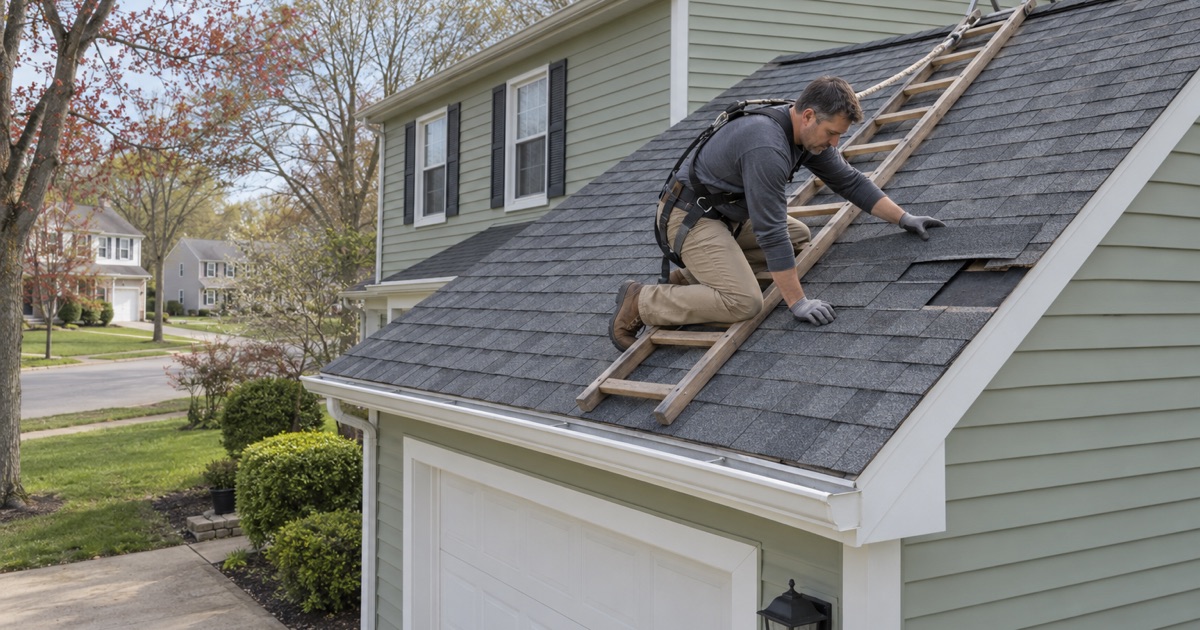
Most of our residential repair work is on asphalt shingle roofs over detached houses, split-levels and colonials built from the 1950s through the 1980s. Typical calls involve wind-lifted shingles, cracked boots and leaks at chimneys or dormers. On these homes, repairing the roof covering counts as ordinary maintenance under the state construction code, so no permit is required.
Townhouses add one more step. When a unit shares a roof with its neighbors, the association documents often decide who may hire a roofer, so we check before writing an estimate. Attached roofs are also permit work in New Jersey, and our paperwork says so rather than leaving it for you to discover.
Repairs on Commercial and Low-Slope Roofs
Shops, offices and small industrial buildings usually carry low-slope roofs with torch-down modified bitumen, EPDM rubber or TPO membranes. Repairs there focus on open seams, punctures from foot traffic, failed flashing at rooftop units and ponding near drains. Each membrane bonds differently, so the patch material has to match what is already on the roof.
Commercial repair also has to work around the people inside. We schedule noisy or odorous work such as torch welding to suit business hours, keep access clear of customer entrances and document every repair with photos for the owner or property manager. Repairs to commercial roofs are permit work, and the estimate notes it.
Shingle Roof Repairs
Replacing Missing and Wind-Damaged Shingles
Wind usually breaks the seal strip first, then creases the shingle as it flaps, and finally tears it free. We replace missing and creased shingles individually, lifting the courses above to nail new ones properly instead of gluing them down from the surface. Surrounding shingles are checked by hand for broken seals, since a gust that removes one often loosens several more.
Architectural shingles such as GAF Timberline HDZ, Owens Corning Duration and CertainTeed Landmark are stocked in common colors, and older three-tab roofs can often be matched with similar profiles. When the original line is discontinued, we show you the closest option before installing it. A small color difference usually weathers in within a season or two.
Pipe Boots and Roof Penetrations
Rubber pipe boots around plumbing vents are among the most common leak sources on any roof. Sun and cold crack the rubber collar after a decade or so, and water follows the pipe straight into the attic. We replace failed boots with new rubber boots or lead flashing boots, tucked properly under the course above rather than sealed on top.
Other penetrations get the same attention. Exhaust fans, satellite mounts and old antenna holes often leak because they were sealed with a bead of caulk and never flashed. We remove abandoned mounts, deck over the holes and flash active penetrations so the shingles shed water around them instead of relying on sealant.
Valleys and Roof-to-Wall Joints
Valleys carry more water than any other part of a shingle roof, so worn granules and split shingles show up there first. We rebuild failing valleys with new underlayment and either closed-cut shingles or open metal, depending on how the rest of the roof was built. Ice and water barrier goes under the valley so standing water cannot back into the deck.
Where a roof meets a wall, step flashing must be woven in with each shingle course and covered by siding or counter flashing. A missing kick-out flashing at the bottom of that wall sends water straight behind the siding, rotting sheathing out of sight. We add kick-out flashing whenever we repair one of these joints.
Flashing, Chimney and Edge Repairs
Chimney Flashing Rebuilt Properly
Chimney leaks rarely come from the brick itself. They come from flashing that was caulked to the face of the chimney instead of having counter flashing set into a reglet cut in the mortar. We remove the old flashing, install new step and counter flashing, and add a cricket behind wide chimneys so water is split around them.
If the crown is cracked or the mortar joints have opened, rain can enter the masonry from above and run down inside the chimney. In that case the flashing is only part of the fix. We point out crown, cap and repointing needs during the same visit, so you can address the chimney and the roof together.
Drip Edge and Rotted Fascia
A roof edge without drip edge lets water curl back under the shingles and onto the fascia board. Over time the fascia rots, the gutter hangers lose their grip and water spills behind the gutter. We install drip edge along eaves and rakes and replace rotted fascia so the edge sheds water into the gutter.
On houses built before 1978, painted fascia and trim may contain lead, and disturbing it falls under the EPA’s lead-safe renovation rule. Our crews plan fascia work on older homes with that rule in mind. It adds some setup, but it keeps paint dust out of the yard and away from children and pets.
Skylight Leaks
Skylights leak either through failed flashing around the curb or through the unit itself when seals break down. We test which one is failing before quoting, because reflashing a sound skylight costs far less than replacing it. Curb-mounted and deck-mounted units flash differently, and the repair follows the method the unit was designed for.
When a skylight is fogged, cracked or near the end of its life, repairing only the flashing makes little sense. In that case we will tell you, and we can replace the unit or remove it and deck over the opening. The choice is yours, and the estimate shows each option separately.
When Repair Makes Sense and When It Does Not
Signs a Repair Will Hold
A roof with flat, well-granulated shingles and a single failure point is a good repair candidate. That describes many East Brunswick roofs installed in the last fifteen years, where a boot, a flashing detail or a storm-damaged patch is the only problem. Repairing that one area restores the roof without spending money on shingles that still have life.
We confirm that judgment from the attic as well. Dry sheathing, sound rafters and good airflow tell us the rest of the roof is healthy. When those checks pass, the repair is priced as a repair, and you are not asked to consider anything larger.
Signs the Roof Is Near the End
Curling tabs, bare spots where granules have washed away, multiple leaks in different areas and soft decking underfoot all point to a roof near the end of its life. A roof already carrying two layers adds another reason, because the next roof will require a full tear-off anyway. Patching that roof repeatedly costs more over a few years than replacing it once.
When we see those signs, we show you photographs from the roof and the attic and explain what we saw. We may still recommend a short-term repair to get through a season while you plan. What we will not do is sell repeated patches on a roof that cannot be saved.
Repairs Before a Home Sale
Sellers often need a roof repaired before listing or after a buyer’s inspection flags something. We can repair the items noted and provide a written roof condition report describing the roof’s age, layers, flashing and the work completed. Giving that report to the buyer’s inspector answers questions before they turn into a price negotiation.
- 20+ Years on Roofs
- Itemized Written Scopes
- Attic-First Leak Checks